

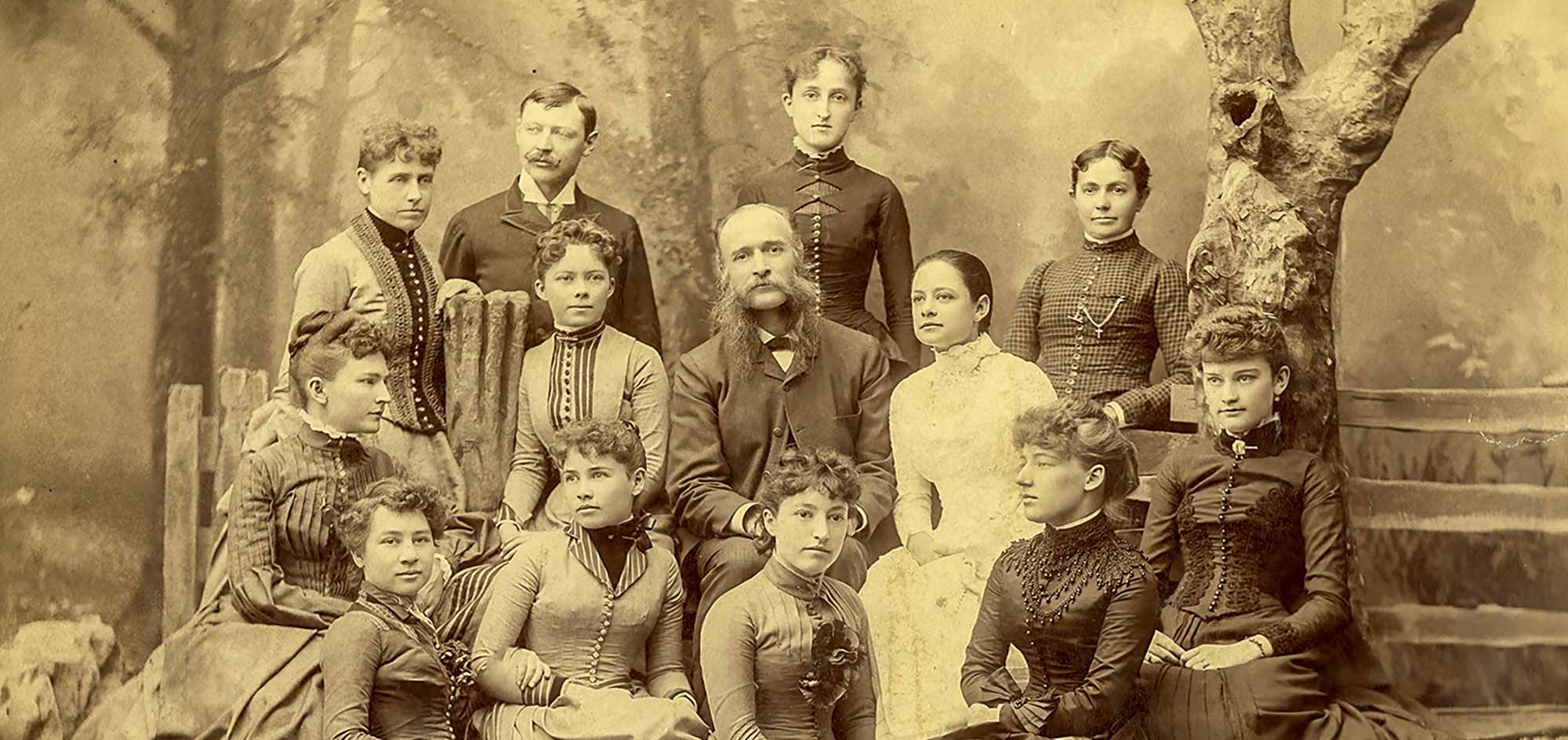
By Thea Tjepkema
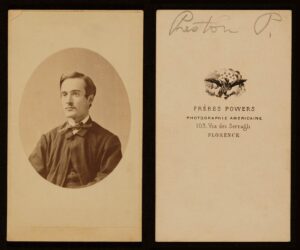
Archives of American Art, Smithsonian Institution.
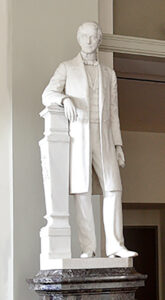
Traveling thousands of nautical miles from Florence, Italy, in specially made wooden crates, two beautiful Carrara marble sculptures by nineteenth-century sculptor Preston Powers arrived in Cincinnati Music Hall in the 1880s. This celebrated sculptor immortalized the personalities of two esteemed champions of community spirit and fellowship, reflecting the very heart of Music Hall, the venue they helped establish, whether through its brick construction or the music that still resonates within the building. In the south corridor of the first floor is a statue of Reuben Springer, “Noble Benefactor of Music Hall,” which captures his gentle smile and embodies his humility and confidence. Above him on the second floor is a bust of Charles Aiken, “Father of Vocal Music in Public Schools,” showcasing his kindly and wise demeanor with an aura of nobility in classical drape. Both statues invite visitors to explore their faces and details, appreciate their contributions to Cincinnati, and learn about Preston Powers’s connection to our city and Music Hall.
POWERS’ FAMILY ROOTS IN CINCINNATI
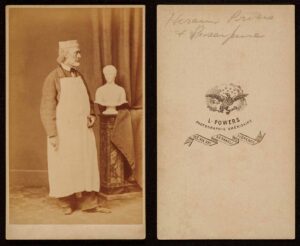
Archives of American Art, Smithsonian Institution.
During Preston Powers’s sculpting career from the 1870s to the 1890s, he gained recognition, in part by following in the footsteps of his sculptor father, Hiram Clark Powers (1805-1873).* With his artistic talent and resolve, Preston succeeded in creating stone portraits that captured personality through expressions, posture, and clothing. Cincinnati is where his father’s modest beginnings grew into a famous sculpting career, without descendant wealth, but through enterprise and determination. In 1818, Hiram Powers arrived from Woodstock, Vermont, and his wife, Elizabeth Gibson (1810-1894), arrived in 1819 from Philadelphia, both with their families, who were seeking new opportunities in the Queen City of the West.
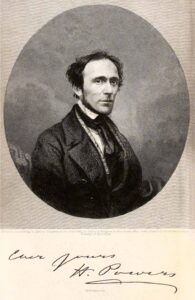
W.W. Rice, Paine & Burgess Publisher.
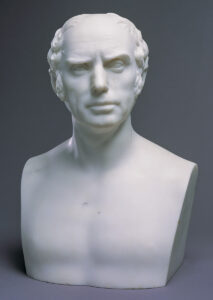
Image Courtesy of Cincinnati Art Museum.
Hiram and Elizabeth married in 1832 and had nine children, including their first two born in Cincinnati: James “Jimmy” Gibson Powers (1833-1838) who died young and Longworth Nicholas Powers (1835-1904)**, named after Hiram’s Cincinnati friend and supporter, Nicholas Longworth, who held the mortgage of their first home on Harrison Street, where their second son was born.
HIRAM POWERS (1805-1873): AMERICAN SCULPTOR BEGINS CAREER IN CINCINNATI
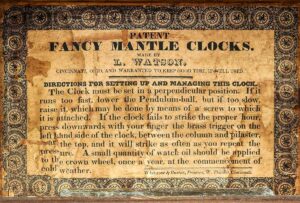
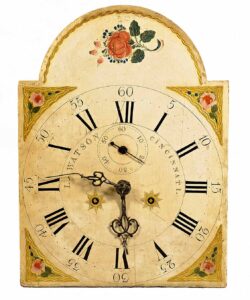
Painted Face, “L. Watson, Cincinnati”.
Hiram began his artistic career as a teenager, carving figures and honing his mechanical skills at Luman Watson's clock and organ manufactory with a retail store on Seventh Street between Main and Sycamore, and later working across the street, at the Western Museum under Joseph Dorfeuille. He briefly studied casting and modeling with Frederick Eckstein Sr., who in 1823 was the first sculptor to move to Cincinnati. Hiram met Elizabeth while living at her parents’ (Anna Reilly and James Gibson) boarding house located ten blocks west of work.
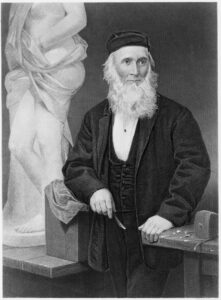
1874, Engraving by Alonzo Chappel,
Library of Congress.
Hiram became a renowned 19th-century American sculptor, best known for his statue The Greek Slave (1843), which became a symbol of abolitionism and earned him international fame.
Throughout his life, Hiram maintained close connections with Cincinnatians, who helped him establish studios in Washington, D.C., and Boston, before he moved to Florence, Italy, in 1837. He chose Florence to establish a studio because of the rising popularity of Carrara marble, the availability of skilled carvers to employ, and the opportunity to learn their generational techniques.
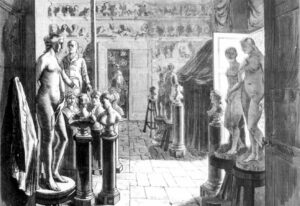
Everette, Fisher Boy, left: California, Webster,
Harper’s Weekly, Oct.4, 1873, p. 869.
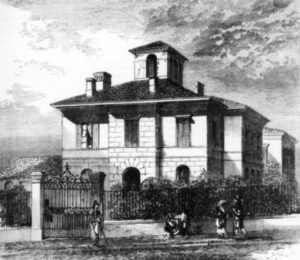
Harper’s Weekly, Oct. 4, 1873, p.869.
American patrons, many of them Cincinnatians, visited and toured the showroom at the Powers Studio and were welcomed into their home, Powers Villa (3 Via Farinata degli Uberti) when they moved in after construction finished in 1868. Although he produced hundreds of sculptures in Florence for the final 36 years of his life, he always considered America his home, carving multiple leading U.S. citizens, advocating against enslavement, and remaining on the Union’s side, patriotic and homesick for his homeland.
PRESTON POWERS (1843-1931) FOLLOWS FATHER & FINDS HIS WAY
William Preston Powers, Hiram’s fifth child, was born in Florence on April 3, 1843, and was named for Senator William Campbell Preston, whose brother John Smith Preston was one of Hiram’s benefactors. A natural artist, Preston eventually took up his father’s profession. Hiram taught his son for six years, from 1868 to 1873, and he learned the business side of the studio as his father's secretary. After his father died in 1873, Preston soon launched his own sculpting career with a studio across the street from the family home in Florence. During Preston’s lifetime, he was credited with sensitive work that conveyed emotional depth, graceful motion, and careful, fine details, which were sometimes said to exceed his father’s.
PRESTON WORKS IN AMERICA
Preston found work in America, crossing the Atlantic Ocean several times. His first trip was just before the end of the Civil War from 1865 to 1867, and he found employment in Patterson, NJ, as a machine shop drafter; on board a U.S. Navy ship as a clerk; and later in life as a sculptor in Boston, MA; Washington, D.C.; Portland, ME; Cincinnati, OH; and Denver, CO. However, in his early twenties, he found it difficult to support himself or to economize. Thus, once his father’s allowance was exhausted, he returned to Florence.
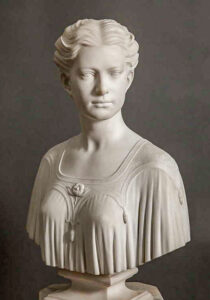
by Preston Powers, ancestry.com.
On April 16, 1872, Preston married American Henrietta “Etta” W. Dyer in Florence and sculpted a bust of her based on his father’s model. Henrietta’s mother, Rebecca, and father, Alford Dyer of Portland, ME, a real estate investor, brought back and displayed her bust. It was “pronounced faultless by her friends; and especially remarkable for its warm and life-like expression,” when described in The Portland Daily Press, on October 5, 1872.
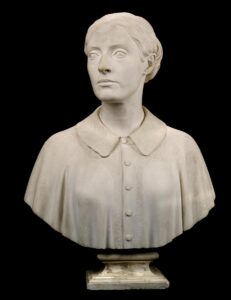
by Preston Powers,
Smithsonian American Art Museum.
A FAMILY RIFT
Preston’s father passed away on June 27, 1873, after a decline in his health due to decades of breathing in marble dust. Sixteen days before his death, Hiram assigned his two eldest sons specific roles to continue his business with salaries: Preston as the manager of the studio, where he and the workers would continue sculpting, and his brother, Longworth, as the accountant. With his older brother overseeing finances, Preston had to request funds for his operations. Both brothers were to be supervised by their mother, Elizabeth Gibson Powers (1857), who would inspect the accounts and make them available to the family. Upset that his father could not trust him to lead the business, just a few days before his father’s passing, Preston left for a year-long trip. He joined his wife, who departed with her parents for the U.S. on June 21, 1873, and returned in September 1874. Preston left his father a letter stating his disappointment in the studio arrangement.
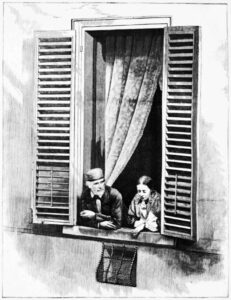
July 19, 1878, p. 620.
As matters stand now, I am liable at any moment to be obliged to give up what I have worked hard and faithfully to obtain, and what I thought I had gained … my position in your studio; this has been my pride till now … (you said) more than once “that I should someday step into your shoes."
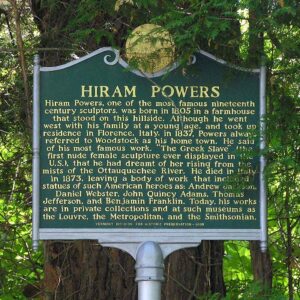
PRESTON’S NOSTALGIA FOR HIS FATHER
In 1874, after his father’s death, Preston visited the home where Hiram was born and raised in Woodstock, Vermont. According to The Springfield Daily Republican, MA, August 18, 1874, Preston proposed buying the property and erecting a statue of his father there. Staying with Senator Justin Morrill in Strafford, VT, Preston gathered pieces from his father’s house, including a stone mantel, door, and frame which opened into the room where his father was born, and shipped them back to his Italian home. Today, the former home site has a Vermont Historic Preservation Marker for Hiram Powers.
CLASSICAL AND CONTEMPORARY STYLE
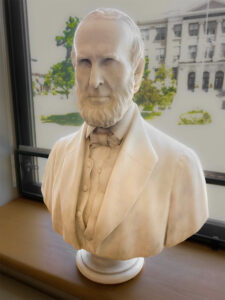
Haverhill Public Library, MA,
Special Collections Department.
Preston adopted his father’s manufacturing techniques for sculptures. These involved making clay and then plaster models (kept as duplicates) from sittings, sketches, or photographs, and having highly skilled Italian artisans in his studio complete parts of each marble carving, with Preston adding detailed finishing touches. While his style mirrored his father’s classical influences, he developed a unique contemporary perspective to convey the nuances of individual personalities.
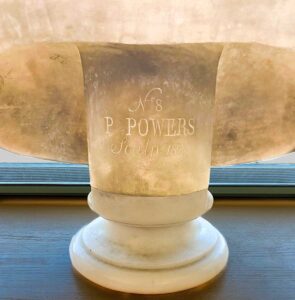
Courtesy of the Trustees of the Haverhill Public Library, MA,
Special Collections Department.
One of his earliest works was a bust of his friend, Quaker poet and abolitionist John Greenleaf Whittier (1874), while living in Amesbury, MA.
His first significant statue of the late U.S. Senator from Vermont, Jacob Collamer (1879), had been a commission for his father, but was always planned to be finished by Preston.
South Corridor, East End,
Cincinnati Music Hall.
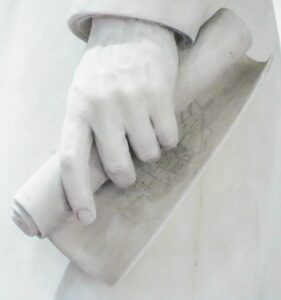
Collamer’s figure in the U.S. Capitol shares a similar pose with Preston’s statue of Reuben Springer (1882), both in classical contrapposto, standing naturally with a slight arc to their bodies, leaning their weight onto a back foot, and resting an arm on a column or newel post.
IN 1879 PRESTON POWERS VISITS CINCINNATI
Cincinnati Music Hall.
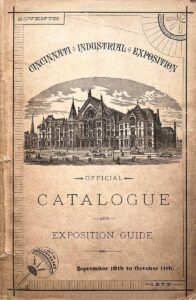
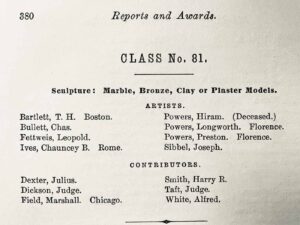
In August 1879, Preston traveled from Florence to Cincinnati to create a model for a bust of Reuben Springer. He attended the grand opening of the completed Cincinnati Music Hall, featuring the new North and South Halls, serving on the Fine Arts Department’s Sculpture Committee for the Seventh Industrial Exposition in Music Hall, September 10 to October 11, 1879.
His late father’s marble bust of Psyche (1853), on loan from Julius Dexter, a trustee of Music Hall, and bust of Judge Alphonso Taft (1870), loaned by Taft himself, were on display in the Fine Arts Department, Art Hall, the South Hall building on Elm Street, which had second-story art galleries. Also on display was a bust of Maud from Tennyson by Longworth Powers, who had tried his hand at sculpting in his father’s studio. Preston showcased his own finished plaster bust of Reuben Springer (1879) and marble busts of Senator Charles Sumner (1876), Professor Agassiz (1878), along with an unknown Boy, and an unknown Lady, and cast of a Boy’s Hand, reminiscent of his father’s earlier work, Loulie’s Hand (1839-CAM), modeled by Preston’s sister, Louisa “Loulie” Greenough Powers ****, which boosted interest in child hand sculptures.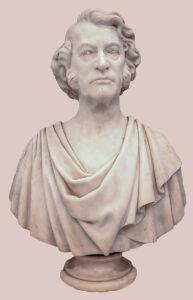
(1876) by Preston Powers,
Courtesy of Bates College Museum of Art, Gift of the Class of 1883.
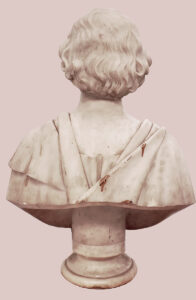
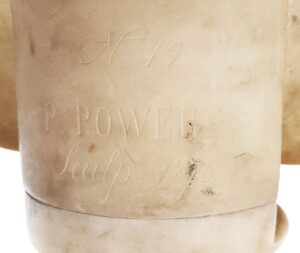
Bust of Senator Charles Sumner (1876), by Preston Powers.
Courtesy of Bates
College Museum of Art,
Gift of the Class of 1883.
MAESTRI: ARTISTRY OF THE ITALIAN SCULPTORS IN POWERS’S STUDIO
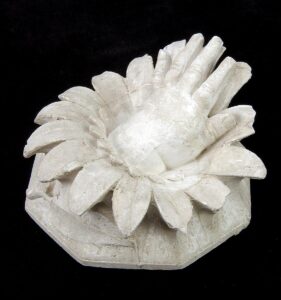
In an interview with Preston Powers in Denver, CO, in the Cincinnati Commercial Gazette, October 18, 1891, he told the story of Remigo Peschi, a skillful and artistic Italian sculptor, who worked for Hiram and carved the six original “Greek Slaves” from Hiram’s model. Hiram gave it the final touches. Peschi also took the plaster cast Hiram had made of his daughter Loulie’s hand, added a sunflower around it, carved it from marble, and gave it to Hiram as a gift. Hiram never wished to take credit for the work. Peschi, along with many Italian artisans, spent hours carving stone based on models by Powers sculptors in their studios, transforming their works into beauty.
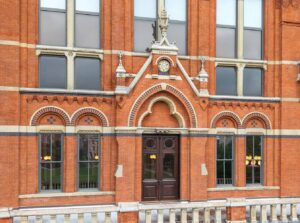
Photo by J. Miles Wolf, 2025.
MUSIC HALL’S FAÇADE HAS A SPOT FOR A BUST OF WHOM?
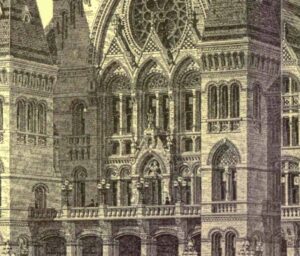
Perhaps the bust of Reuben Springer by Preston Powers was intended for the exterior plinth under the datestone on Music Hall’s east façade.
An unknown bust with classical drapery in the trefoil-arched niche appears in lithographs. However, photographic evidence of an installed bust has not been found.
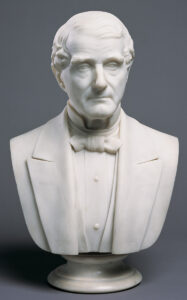
by Preston Powers, Cincinnati Art Museum;
Gift of the Artist, 1983.306,
Image Courtesy of Cincinnati Art Museum.
Interestingly, the completed marble bust of Reuben Springer (1880-CAM) in a dress jacket, stiff collar, and bow tie was donated by the artist to the Cincinnati Art Museum (CAM), perhaps after the humble Springer declined it. Springer was the most generous donor toward the construction of Music Hall. But he refused any recognition that would attach his name to the building. He most likely did not favor his bust on the façade.
“This (Music Hall) is a great public enterprise and should have nothing personal in it. The hall, when built, will be out of the donations of the citizens of Cincinnati, the ground on which it is built is the property of the city, and there is eminent fitness in naming it Cincinnati Music Hall.”
–R.R. Springer, to the Editor of the Commercial, Cincinnati, Nov. 7, 1875.
SWEDENBORGIANS IN CINCINNATI
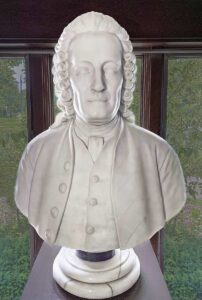
by Preston Powers,
Glendale New Church.
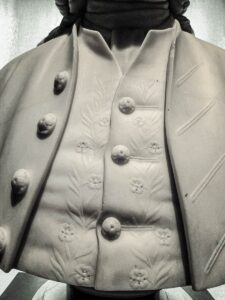
In 1879, Preston Powers completed a bust of Emanuel Swedenborg (1879), a person his father admired and had always wished to sculpt. Swedenborg, an 18th-century Swedish theologian, engaged intellectual thinkers, not passive recipients, to join the New Church (Swedenborgianism). Sometimes called the New Jerusalem Society, the Swedenborgians were first established in America in Baltimore, MD, in 1792, and then in Cincinnati in 1811. Swedenborg’s spiritual teachings influenced several nineteenth-century artists. Hiram likely learned about the Swedenborgians from his brother Benjamin F. Powers, who had arrived in Cincinnati a year before him in 1817. Benjamin was a member of the New Church in Cincinnati, listed in the minutes of 1825. During his time in Cincinnati, Hiram worked for Swedenborgian Luman Watson, who also joined in 1825, and was a founder of the Ohio Mechanics Institute, which began the industrial expositions around the city, eventually in Music Hall. Hiram was also taught sculpting by Frederick Eckstein Sr., a devoted Swedenborgian who immigrated from Berlin to Philadelphia. In Philadelphia, Frederick married Jane Bailey, daughter of the founder of the New Church in Baltimore, before moving to Cincinnati. Eckstein joined the Cincinnati branch of the New Jerusalem Church in 1838, and his son, Frederick Eckstein Jr., in 1851. In 1865, Hiram expressed his devotion to the faith in a letter to Dr. John Spurgin, president of The Swedenborg Society in London, confirming he was a “New Church Man,” replying to his request for a bust of Swedenborg, and his home served as a meeting place for the New Church members in Florence.
EMANUEL SWEDENBORG BUST IN MUSIC HALL & NEW CHURCH
Glendale New Church.
His father’s beliefs may have inspired Preston to sculpt a detailed bust of Swedenborg, and several copies acquired by New Churches, including those in London and Boston. After raising $500 in subscriptions, in November 1880, a bust (No.36) was ordered for the First New Jerusalem Society of Cincinnati.
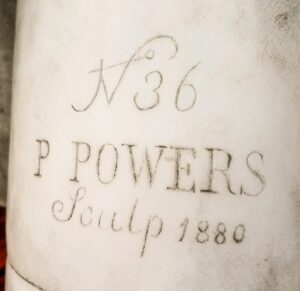
On July 29, 1880, the Cincinnati Enquirer announced that the bust of Emanuel Swedenborg (1880) was expected soon for the Swedenborgian Church on Fourth and John Streets. According to the 1880 minutes, it was first displayed in the “Women's Art Museum.” The Women's Art Museum Association (WAMA) operated the Music Hall art galleries in the South Hall as the city’s first “Art Museum” by hosting Loan Exhibitions, and raising collections, money, and public taste for art to build support for the founding of the Cincinnati Art Museum.
POWERS’ WORK IN MUSIC HALL EXPOSITIONS
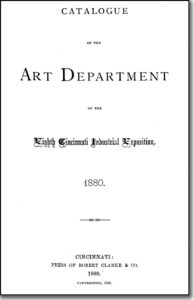
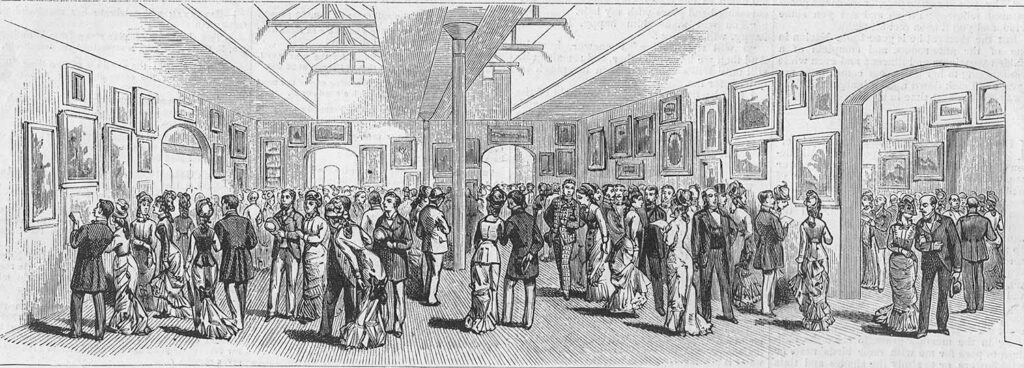
The Swedenborg bust likely arrived just in time for the Eighth Industrial Exposition at Music Hall, which ran from September 8 to October 9, 1880. It was listed in the catalogue of the art department, Emanuel Swedenborg (1880), on loan from the Church of the New Jerusalem, alongside a marble bust of Reuben R. Springer (1880) by Preston Powers. In the 1883 Eleventh Industrial Exposition in Music Hall, Powers showed a Singing Peasant Girl (whereabouts unknown), 27 inches high, carved in Carrara marble, which The Washington Post (June 25, 1882) stated had just arrived in Cincinnati from Florence. No records of his works were shown in other Music Hall expos.
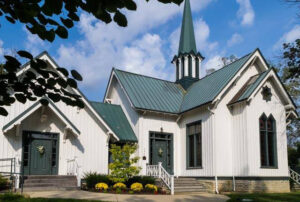
In 1893, the bust of Swedenborg was loaned to the Chicago Society for the World’s Fair New Church Exhibition, then returned to Cincinnati, where it remained in storage until displayed in the second location of the New Church at Oak Street and Winslow Avenue in Walnut Hills (1903-1968 razed). It is now located in the Glendale New Church of Montgomery.
PROFESSOR POWERS TEACHES AT MUSIC HALL
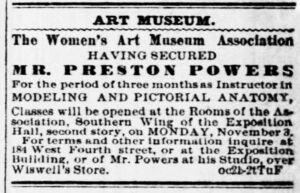
Instructor of Modeling & Pictorial Anatomy,
Music Hall, South Hall, Cincinnati Enquirer, p.5.
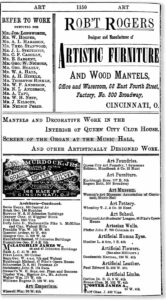
Women’s Art Museum Association of
Cincinnati, Music Hall,
Williams’ City Directory, 1880, p.1150.
Preston Powers briefly stayed in Cincinnati, perhaps in his studio above William Wiswell’s Art Emporium at 70 W. Fourth Street, while teaching modeling and pictorial anatomy for women students for a term of three months (November 1879 to January 1880).
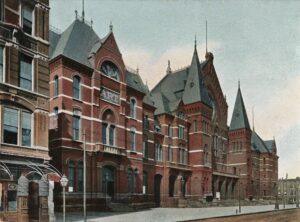
Under the auspices of the Women’s Art Museum Association (WAMA), art classes, paid by tuition, were held in Music Hall's South Hall, culminating in student art shows and receptions in the art galleries. Other famous artists were professors in Music Hall, with classes in oil painting under John Henry Twachtman, drawing and watercolor under Henry Muhrman, and decorative modeling under sculptor Ferdinand Mersmann. Reuben Springer, in their first year, covered WAMA’s rent for the school rooms and galleries. On January 2, 1880, the WAMA art galleries, decorated by artist Henry Farny, held the student reception along with their permanent Loan Exhibition, ceramics (including a vase by Maria Longworth Nichols), and engravings, including the busts and statues made in Professor Powers’s Music Hall class. His student’s work featured a head by soon-to-be-famous Cincinnati artist Elizabeth “Lizzie” Nourse and a bust of a child by Laura Fry, of the art carving family that carved panels for the Cincinnati Music Hall 1878 Hook and Hastings organ. Michael Brand’s Cincinnati Orchestra furnished music for the reception, and Mrs. Preston Powers attended along with prominent citizens, including Wulsin, Farney, Nourse, and Taft family members. Also in attendance was Attorney John E. Hatch (1846-1880). Hatch was the director of that year's May Festival and treasurer of the Music Hall Springer Statue Committee and commissioned a bust by Preston Powers of his late wife, Caroline Augusta Bates Hatch (1851-1876). Shortly after the exhibit, the Cincinnati Daily Star reported that Professor Powers, "a pride of the Association (WAMA) … intends to return to Italy."
REUBEN SPRINGER STATUE BY PRESTON POWERS IN MUSIC HALL
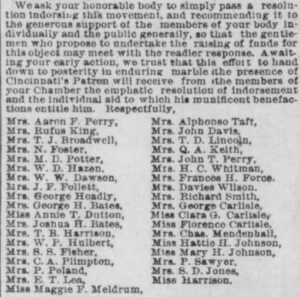
Chamber of Commerce for Support for
Reuben Springer Statue (1882) by Preston Powers.
Powers’s Springer bust exhibited at the 1879 Exposition inspired a committee of 37 WAMA women to write a letter addressed to the Chamber of Commerce on February 4, 1880, to recommend public support to raise funds for a Music Hall statue by Preston Powers. With funds raised by this committee of citizens, Powers was hired for $7,000, to sculpt the statue to be donated to the Cincinnati Music Hall Association to stand in Music Hall.
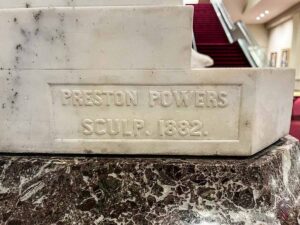
Powers completed the model of the statue in his studio in Florence, Italy, between March and November 1880, and the marble statue was finished in 1882.
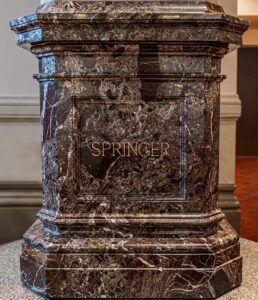
Reuben R. Springer (1882) stands 11 feet, 7 inches tall, weighs 1,000 pounds, and is placed on a pedestal of Italian porphyry, a dark gray stone streaked with light green and white veins, quarried a short distance from its Carrara marble on a base of Maryland gray granite.
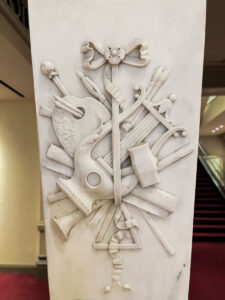
A detailed relief on the column Springer leans on symbolizes activities in Music Hall: a chisel and hammer, a lyre, a triangle, a clarinet, an artist’s palette, brushes, a maul, and a scroll of music.
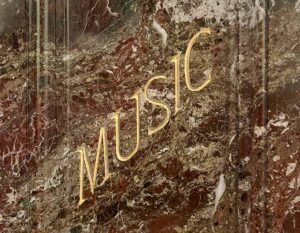
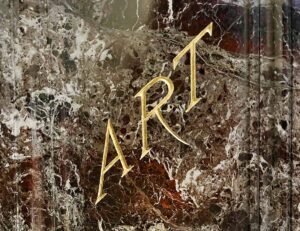
On each side of the porphyry pedestal are the words in gilt letters: “Springer” (front), “Music” (right), “Industry” (back), and “Art” (left).

GRAND UNVEILING OF SPRINGER STATUE
Powers arrived in the U.S. on May 7, 1882, visited relatives in Dorchester, Massachusetts, and attended the unveiling in the central vestibule of Cincinnati Music Hall on May 15, 1882. A crowd from rich to poor, prominent citizens, and schoolchildren filled the upper and lower levels of the lobby, where the statue stood against the west wall, between the center and south doors. Springer did not attend out of modesty. After the College of Music of Cincinnati–CMC Chorus (CMC campus was next door to Music Hall) sang Beethoven’s The Heavens Proclaim Him, trustees for the statue spoke: Attorney Rufus King, George W. McAlpin, and Alfred T. Goshorn. The Cincinnati Enquirer, the next day, reported that Powers came forward, blushing, saying he felt better “using clay than using words” and “hoped to be excused from saying anything.” Rufus King mentioned “The name of Powers stands earliest and foremost in the art history in Cincinnati … and now, by a happy example of hereditary talent, his name and fame come back to us worthily in this work of his son … and I trust … (Preston) becomes linked with his father's early home.” The reviewer further noticed, “The striking familiarity of every lineament of the face, its apparent contentment, and the true likeness of every portion – (which) gave vent to a burst of applause.” The reviewer must have spoken to Preston: He wrote, “Mr. Powers considers this his greatest work.”
CHARLES AIKEN BUST BY PRESTON POWERS IN MUSIC HALL
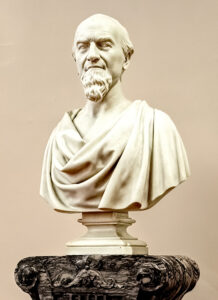
Preston Powers won the commission by the Aiken Memorial Fund Committee and created his most notable bust, Charles Aiken (1884).
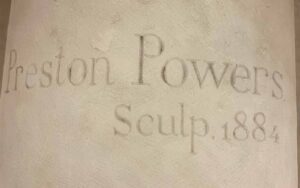
Bust of Charles Aiken (1884) by Preston Powers,
Cincinnati Music Hall.
Aiken, the first Superintendent of Music in Cincinnati public schools and vocal arts professor, who taught the city to sing from 1847 to 1878, inspired principals, teachers, and students to raise $1,100 for the monument.
Charles Aiken (1818-1882) is fittingly memorialized in Music Hall, where he brought the first mass public school children’s choir to the stage and laid the foundation for listeners and singers for ages to follow.
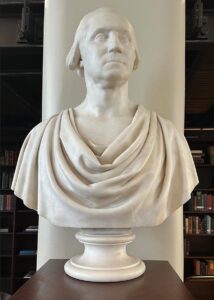
by Hiram Powers, Mercantile Library, Cincinnati, OH.
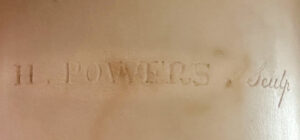
Bust of George Washington (1844) by Hiram Powers,
Mercantile Library, Cincinnati, OH.
The bust features Aiken’s detailed beard, wavy hair, and a faint smile, and is draped in a classical toga (himation), like a Roman emperor, reminiscent of Hiram Power’s George Washington (1844).
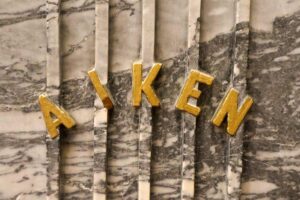
of the pedestal.
Aiken’s Carrara marble bust is on a gray-and-white-streaked limestone (Tennessee Marble, Knoxville), lyre-shaped pedestal with each letter of his name gilt on a string resting on a rose granite base. Powers sculpted it from a photograph of Aiken sent to Italy and provided a plaster bust in the fall of 1883 for approval by the family and committee. On November 6, 1883, the son of Nicholas Longworth, Joseph Longworth, president of the board of the trustees of the Cincinnati Music Hall Association, approved placing the bust in Music Hall’s central vestibule. The marble rendition, shipped in June of 1884, was unveiled on November 15, 1884, and the next day, the Cincinnati Commercial Gazette reported on the event:
PROFESSOR & DEAN: POWERS IN DENVER, COLORADO
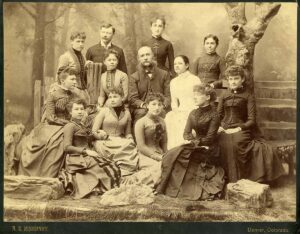
Special Collections and Archives.
After moving to Denver in 1886, Powers spent his later years as a professor of art, teaching many women sculptors at the University of Denver’s School of Fine Arts (established in 1885 and incorporated in 1915). By 1892, he became the dean and professor of sculpture and modeling. The 1895 yearbook noted an Art Students’ Club of 15 women and one man taught by Powers. Two of his women students would become famous sculptors: Alice Cooper (Hubbard) (1875-1937) and Elsie Ward (Hering) (1871-1923).
In 1893, Preston’s bronze statue, The Closing of an Era (1892), was exhibited at the Chicago World’s Fair and now stands before the Colorado State capitol in Denver, depicting a Native American over a slain bison, accompanied by a plaque with a poem by John Greenleaf Whittier, written for his friend, after being inspired by Powers’s drawing of the piece.
The mountain eagle from its snow-locked peaks
For the wild hunter and the bison seek,
In the changed world below, and find alone
Their graven semblance, in the eternal stone.
Preston Powers returned to Florence, where he died at home (5 Via S. Agostino) at 88 on December 22, 1931, senile and penniless. His niece, Alice Mildred Ibbotson, reported his death as a U.S. citizen to the U.S. State Department on January 12, 1932. His grave is in the Allori Protestant Cemetery in Florence, where his father also lies under a stone carved by Preston.
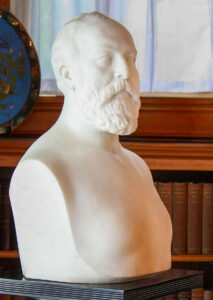
by Preston Powers,
James A. Garfield National Historic Site, Mentor, OH.
Throughout his career he sculpted busts of notable figures, including Whittier’s heroine, Maud Muller; Longfellow’s, Evangeline; Naval Captain, James Lawrence (“Don't Give Up the Ship”); South Carolina politician, lawyer, and businessman, Langdon Cheves; U.S. Senator, Justin Smith Morrill of Vermont; President Ulysses S. Grant; President James A. Garfield,***** Marshall Field and Son of Chicago; (Aaron) Eugene Sargent of Boston; Alvin Adams of Boston, Adams Express Co.; Bishop George Burgess, first Episcopal Bishop of Maine; Lady Alexander MacKenzie of Scotland; J.C. Whiting and Mrs. Wheatland, of Salem, MA; and Cincinnati merchant, Job M. Nash (1884) –– whose copy of his bust is on his grave in White Plains, NY.
Preston Powers did not achieve the same notoriety as his father, but his works are represented in the Cincinnati Art Museum, Smithsonian American Art Museum, and the Metropolitan Museum of Art. Cincinnati Music Hall showcases its finest statue and bust — Springer and Aiken — honoring key figures in the community who brought music to the people. Both memorials celebrate the legacy of father-and-son sculptors who honed their artistic talents here.
Not only is the memorial we unveil to-day (Aiken) in itself a fitting tribute,
but the place of its erection a most appropriate one … May we not venture to hope
that it is only the beginning of a movement which in its future course is destined
to uprear in this place many similar memorials … who, like him we honor,
shall distinguish themselves as contributors to the musical advancement
of this community. Then with the statue of that princely lover and patron of music,
Reuben R. Springer, as its central figure, will this proud edifice not only answer,
as now, to its title of Temple of Music, but will also be acknowledged as
the Parthenon of the musical celebrities of the Queen City.
"At the Unveiling of a Memorial Bust of the Great Music Teacher,"
Commercial Gazette, Nov. 16, 1884.