

By Thea Tjepkema
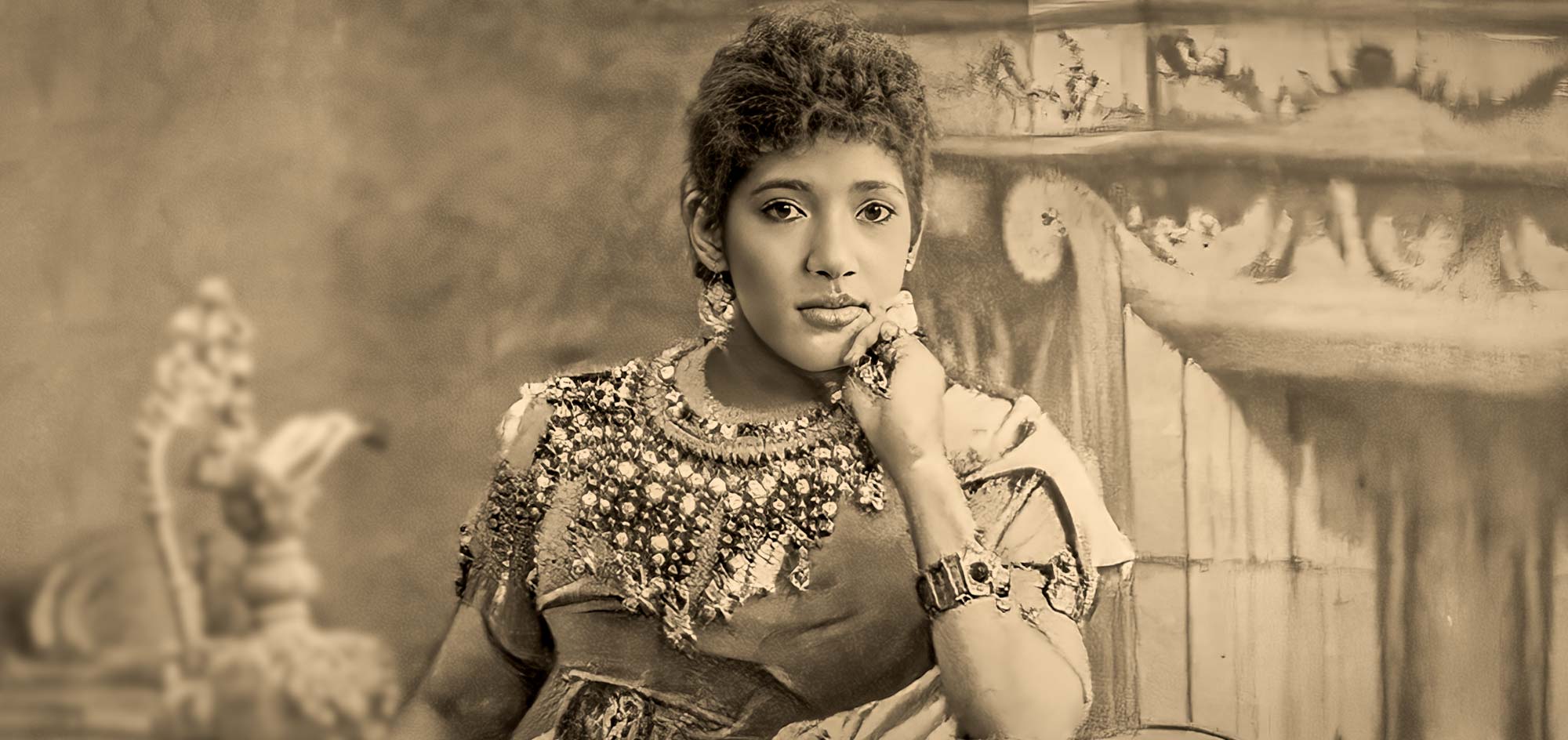
Raised in Cincinnati, Ohio, Mary S. Price Holloway Williams, “Madame Marie Selika” (1850-1937), became a renowned African American coloratura soprano, whose fame reached its zenith in the 1880s and 1890s. Her formative years were spent growing up in a large family, singing in school, church, and community venues. Her reputation grew as she toured extensively throughout the U.S. and Europe. In 1878, she made history as the first Black artist to give a formal recital at the White House, just three months after Cincinnati Music Hall opened. Nearly a decade later, on September 24, 1887, Madame Selika performed for her largest audience, 15,000 people at a Republican ratification meeting packed into Music Hall’s Springer Auditorium. Among those in attendance were many prominent African American citizens and members of Black Republican Clubs from across the city. It was an extraordinary occasion, particularly just a generation after the end of the Civil War, for such a large and integrated audience to gather in Music Hall to hear a leading African American singer perform classical arias. Her singing at this event engendered hope that both individuals and collectives of the minoritized could effect change. From her humble beginnings, Madame Selika found her voice, inspiring her audience, facing similar oppressive odds, to believe in and strive for racial equality within and beyond the arts.
EARLIEST BLACK DIVAS OF THE NINETEENTH CENTURY
History records the names and achievements of numerous nineteenth-century white operatic and classical singers, while only a few Black divas overcoming significant racism attained similar success.
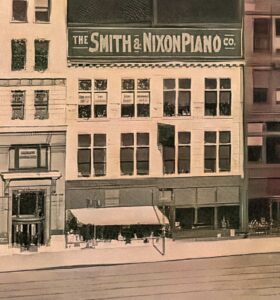
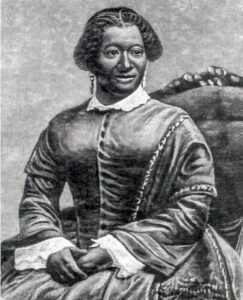
The first Black woman to have a prominent career as a classical or operatic singer in America was Elizabeth Taylor Greenfield (1819-1876), given the stage name “The Black Swan” after the famous (white) soprano Jenny Lind, “The Swedish Nightingale”. Greenfield debuted in Buffalo, New York, in 1851, and performed in Cincinnati’s Smith and Nixon’s Hall on March 10, 1852, to an all-white audience.
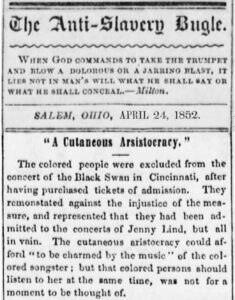
Black patrons had purchased tickets but were barred from entry. Greenfield toured the U.S. and Europe, performing at Buckingham Palace for Queen Victoria in 1854, continuing until her death. She died the same year Cincinnati’s Saengerhalle, or Exposition Halls, were torn down, and construction of Cincinnati Music Hall began on the same lot.
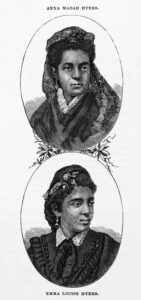
The Hyers performed in Cincinnati multiple times at major theaters between 1878 and 1894, including on the main stage of Cincinnati Music Hall in 1884.
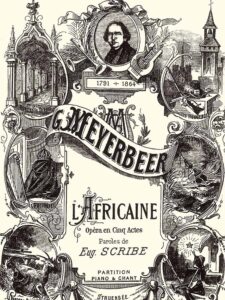
Opera Score Cover, c.1865, AbeBooks.
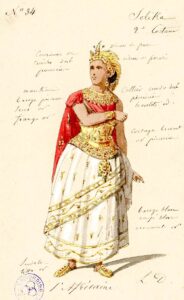
In 1887, the nationally and internationally renowned Black soloist, and native Cincinnatian, Mary S. Price Holloway Williams performed on Music Hall’s main stage, under her chosen sobriquet “Madame Sélika,” after the heroine African Queen, Sélika in Giacomo Meyerbeer's L’Africaine.
MADAME JONES AND THE FUTURE
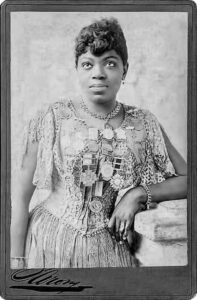
Cabinet Card by Napoleon Sarony, NYC.
Matilda Sissieretta Joyner Jones (1868-1933), or her preferred designation, “Madame Jones,” followed in Madame Selika’s boundary-breaking wake, performing at Music Hall on March 10 through 12, 1893, following her historic appearance as the first African American soloist (with ensemble) at Carnegie Hall.
John Smith Van Cleve, a Boston music critic, wrote a review in The Cincinnati Post, first noting the influence of German classical music on Cincinnatians as “stripped of decorations.” He praised Jones’s “singing of the great aria from Meyerbeer's L’Africaine as a delight long to be remembered; especially the little melodious phrases at the beginning, expressing tender affection, delivered with captivating sweetness.” He continued, “she is not of the Wagnerian fad, and more of a (Lilian) Nordica than (Adelina) Patti.”
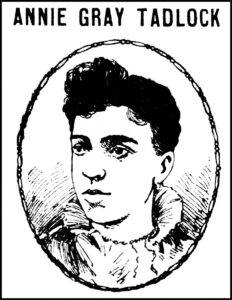
Jones returned to Music Hall for a concert on June 22, 1893, and invited a locally and nationally recognized African American soprano, Annie Gray Tadlock (1867-1911), to join her program. Tadlock had studied at the College of Music of Cincinnati (CMC), next door to Music Hall. Jones often invited aspiring Black artists to the stage to boost their careers. Jones became the highest-paid African American artist of the 19th century ($150 per concert at Music Hall) and was nicknamed "The Black Patti" by the press, after (white) soprano Adelina Patti.
LIFTING EACH OTHER UP
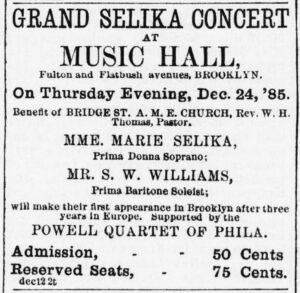
The New York Freeman, Dec. 19, 1885, p.3.
Madame Jones received her big break at age 17 from Madame Selika when she was invited to perform in a Grand Selika Concert at Providence Music Hall, Rhode Island, Jones’s hometown, on December 3, 1885. This appearance led to Jones’s New York City premiere, where she performed in Flora Baston Bergen’s Star Concert on April 5, 1888, in Steinway Hall. By August, Jones’s sobriquet “Black Patti” was in use in newspapers.
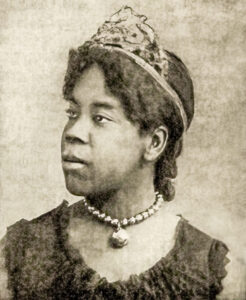
The leading Black divas who performed at Cincinnati Music Hall–the Hyers Sisters (1884), Madame Selika (1887), and Madame Jones (1893)–opened doors for numbers of local, national, and international Black soloists onto stages for concert performances in the U.S. and around the world, leading to eventual inclusion in fully staged operas in major opera companies and houses. Notable Black female singers to follow in Cincinnati Music Hall included locals Nadine Roberts Waters (1928, 1954), Helen Walker King (1929), and Estella Rowe (1952).
DISCOVERING MADAME SELIKA’S NAME & CHILDHOOD IN CINCINNATI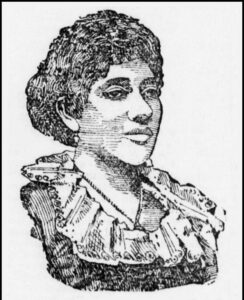 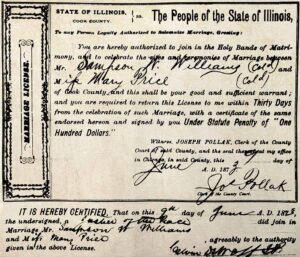 Though an extensive biography of Madame Selika does not exist, many short ones mention her birth name as Mary Smith, that she grew up in Cincinnati, attended school, took vocal lessons, and received support for her career from a wealthy white or German family (not confirmed). The closest biography is found in an interview given by Madame Selika on tour in Europe in the Cleveland Gazette on August 8, 1891, which provides clues to piece together her name and childhood in Cincinnati. The interviewer mentions her maiden name was Price, she was born in Natchez, Mississippi, and her mother died when she was quite small. The article continues, “her father, H. Price, with several of his daughters came to Cincinnati to live, and Selika was raised by an elder sister, Mrs. Holloway.” Also, “Her voice was first remarked upon in the Allen Temple Sunday-school, where she sang; afterwards she took part in nearly all the Sunday-school and church entertainments in Cincinnati. From Cincinnati, she went to Chicago, where her voice was tested, and here she was married to her husband, who is now traveling with her, Mr. Sampson W. Williams." BABY MARY S. PRICE HOLLOWAY “Madame Marie Selika” ARRIVES IN CINCINNATI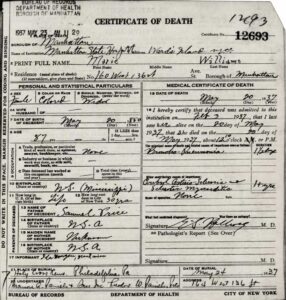 Manhattan State Hospital, May 20, 1937. Census records, marriage licenses, and city directories (no birth certificate has been found) have helped piece together Madame Selika’s life. Her name was Mary S. Price Holloway (1850-1937), and she was born in Natchez, Mississippi, and brought to Cincinnati the year of her birth. She left Cincinnati to marry baritone, Sampson W. Williams (1842-1911), on June 9, 1873, in Chicago. Marie Williams' death certificate states she was born on May 20, 1850, and died on May 20, 1937, at age 87. Her last residence was at 160 W. 136th Street, Harlem, New York. 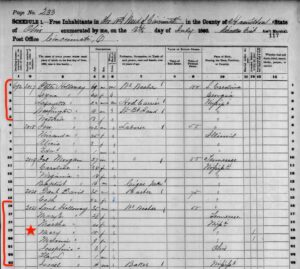 Mary's father is listed as Samuel Price on her death certificate. Mary S. arrived in 1850 in Cincinnati from Mississippi with her father, Samuel P. Holloway (c.1820-1896), and paternal grandparents, Peter Price Holloway and Serina McGee (Magee) Holloway (1787-1893). The 1860 U.S. Census taken in Cincinnati lists Samuel Holloway (35-c.1825) and Mary E. (36-c.1824-TN) with six in their household, the first four born in Mississippi, Samuel’s children by his first wife, the last two born in Ohio, by his second wife, Mary E. Timms, whom he married in Cincinnati in 1856: Israel (16-c.1844-MS), Martha (14-c.1846-MS), Mary (10-c.1850-MS-the future Madame Selika), Malonia (9-c.1852-MS), Josephine (3-c.1857-OH), and Floyd (1-c.1859-OH). MARY’S MAIDEN NAME IS UNCLEARSometimes, Madame Selika’s name is given in early newspaper articles as Mary S. Price. The name Price is also used as a middle name for her paternal grandfather and grandmother, and possibly her father’s as well, sometimes listed with the middle initial P. Further research on the Holloway family may reveal Mary S. Price Holloway’s mother’s name, maiden name, and burial location.* RESIDENCES OF SAMUEL HOLLOWAY & DAUGHTER MARYMary’s early life must have been chaotic, supportive, or both. Never knowing her mother, being raised in a large household with her father, stepmother, siblings, half-siblings, and paternal grandmother and grandfather, and dealing with several family relocations in Cincinnati were likely childhood stressors. Beginning in 1857, the Cincinnati city directories list Samuel Holoway (sic-Holloway), laborer, living at 180 Clay Street (razed), and in 1858 with his mother, Mrs. S. (Serina) Holloway (Selika’s grandmother), at the same address. In 1861, Peter Holloway (Selika’s grandfather), a whitewasher, lived at 187 W. Court Street ( razed). From 1862 to 1877, Samuel Holloway, whitewasher, lived at 62 or 66 Peete Street (razed). In 1878, Samuel, a whitewasher, and his father, Peter, are listed at the same address, 613 Main Street (razed). SUPPORT & MUSIC AT SCHOOL FOR MARY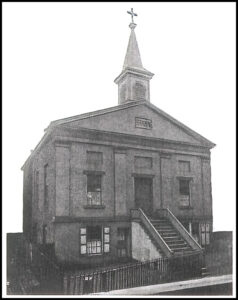 Mary S. Price Holloway lived downtown from 1855 to 1868, ages 5 to 18, and may have attended Cincinnati's public or private schools for African American children. From 1855 to 1861, she lived on Clay Street, a one mile walk to the Western District Elementary School (1859-1901) on W. Court Street. From 1862 to 1868, ages 12 to 18, she lived on Peete Street and may have attended Gaines High School (opened in 1866 at the same location as the Western District School), about a mile's walk southwest from her home. And possibly because her obituary stated she was a devout Catholic, she may have attended St. Ann's Roman Catholic Church and Parochial School* for African Americans on New Street, east of Broadway Street, which would be a great distance from her then home. All these schools had robust music programs. CLUES FOUND IN GRANDMOTHER SERINA HOLLOWAY’S OBITUARIES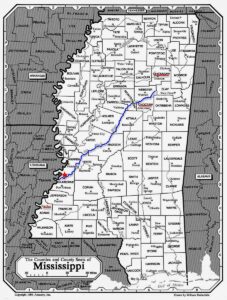 An obituary in the Cincinnati Commercial Gazette’s Black news column, “In Colored Circles,” February 12, 1893, announced the death at 106 years old of Madame Selika’s grandmother, Mrs. Serena (sic) Price Holloway, the grandmother of Madame Selika, famous singer. Her son, Samuel, 75, lived with her at the rear of 121 Providence Street. Serina’s obituary mentions the family arrived in Cincinnati in 1850, “riding up the levee on a dray (cart).” Several cotton plantations were in the area where Serina was born, 75 miles from Natchez, in Big Block (sic-Big Black*), Mississippi, and Serina’s obituary stated, “she never was a slave.” The article continued that she married Peter Price Holloway at 20 (1808) and had 15 children. Mary’s father, Samuel, was one of their six children still alive, living with Serina, when she died. The obituary states that Samuel had six grandchildren and ten living children, the eldest of whom is 45. [Possibly the eldest sister, Martha, mentioned in the 1891 interview, who “raised” Mary.] |
MARY S. PRICE CAREER BEGINS AT HOME
When the Holloway family arrived in Cincinnati in 1850, they likely attended two key churches that hosted African American events, Allen Temple A.M.E. (est. 1824) and Union Baptist (est. 1831). In her 1891 interview with the Cleveland Gazette, while in Europe, Madame Selika mentions singing in Sunday school at Allen Temple and participating in various church entertainments around town. Both Allen and Union held regular concerts, performances, political meetings, and speakers on current events featuring local and national African American celebrities. The interview continues that after leaving Cincinnati, she moved to Chicago, married, and then they relocated to San Francisco.
MARY S. PRICE MARRIES SINGING PARTNER, MOVES TO SAN FRANCISCO
University of California, Berkeley.
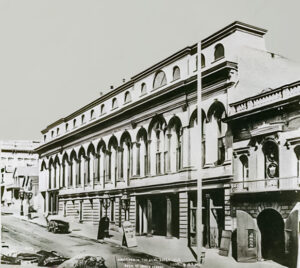
It is unclear how long Mary lived in Chicago; she and Sampson W. Williams were married in 1873 before moving to San Francisco. Her professional debut came with the support of San Francisco’s progressive Black community, on October 29, 1875, in Pacific Hall, on the second floor of the California Theater. An advertisement in the San Francisco Chronicle two weeks prior announced Mrs. Sampson Williams, a resident of Oakland, would sing in an “operatic and ballad concert” with well-known local songstress, Mary Josephine Miles, and others. Mr. and Mrs. Sampson Williams were on the Pacific Board of Musicians of San Francisco (est. 1866) along with Sara E. Miles, prima donna, Mary Josephine Miles, contralto, William Blake, piano, and Miss Teenie Edmonds of The Pacific Musical Academy (est. c.1873).
SELIKA WALTZ OF MAGIC
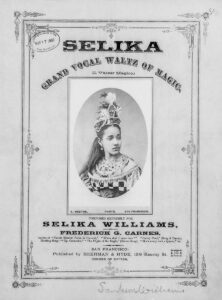
On December 28, 1876, for a benefit concert in Pacific Hall, Mrs. Sampson Williams debuted “The Selika Magic Waltz,” composed for her by Prof. Frederick G. Carnes, principal of the Pacific Musical Academy, a music teacher, pianist, and local sheet music composer who accompanied many concerts in town. This concert was the first time she was referred to as “Selika” in the press. On February 20, 1877, she performed in concert with Miss Maggie Webb at the Academy of Music (Sixth Street near Broadway). Both Williamses took voice lessons while living in San Francisco with Italian tenor Signor Eugenio G. Bianchi.
VOICE LESSONS IN CHICAGO WITH SIGNOR A. FARINI
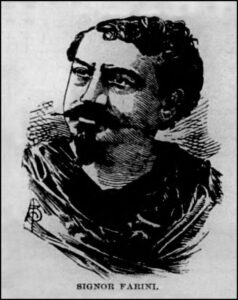
Returning East, the Williamses spent a year in Chicago so Madame Selika could study voice with Italian baritone, Signor Antonio Farini. Having a successful career in Milan, Farini moved to the U.S. in 1860 and sang with the Max Strakosch* Opera Company. After retiring, he taught voice in Chicago before settling in New York and becoming a U.S. citizen in 1892. He regarded Marie Selika as one of his most talented students, noting "…in Europe at least … (there) was no bar to the success of a really gifted singer[;]... (her race) would (also not) prove any serious drawback in the United States ... (but) on the contrary, might prove attractive because of its novelty."
ENDORSED BY MAX STRAKOSCH
Madame Selika received an endorsement letter from Max Strakosch on November 29, 1877, after hearing her sing in Farini’s studio. He praised her vocal technique, stating, “her change from the chest to medium and head register is artistic; her breathing and phrasing are perfect; in short, she has received a very fine cultivation by proper instructions. And now I can confidently recommend her to accept any engagements that may be offered to her and assure her of immense success. With my best wishes for her future, I remain, Respectfully, Max Strakosch.” Although Strakosch was a leading opera talent agent in the U.S. and abroad, he never signed Madame Selika to his opera company.
ENDORSED BY SAM LUCAS, BLACK ENTERTAINMENT AGENT OF CHANGE
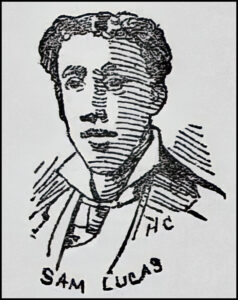
Sam Lucas, an African American composer and manager of his own jubilee troupes, published Strakosch's letter in support of hiring top artists for his all-Black company, which includes Madame Selika, whom he called “the finest prima donna of color in the world.” His ad, written in Cincinnati after leaving the Hyers Sisters Combination, was printed in the Fayette County Herald, his hometown newspaper, on April 4, 1878. From 1879 to 1880, Lucas performed with Madame Selika and the Hyers Sisters for the Redpath Lyceum Bureau, in the Ideal Colored Company. Starting in 1880, Lucas formed his first jubilee group, showcasing his own songs and those of other Black composers. Remarkably, Mesdames Selika and Jones continued to build their reputations singing opera and classical works primarily and, less often jubilee songs.
SEVERAL CINCINNATI CONCERT APPEARANCES OF MADAME SELIKA IN 1878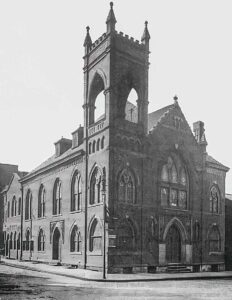 The Cincinnati Enquirer on February 7, 1878, announced, “Selika (Miss Mary S. Price), Cincinnati’s colored prima donna soprano, who received from Manager Max Strakosch the title of “America’s Colored Patti” will appear in concert in Union Baptist Church this evening in her favorite role of “Selika” in Meyerbeer’s L’Africaine.” She was assisted by S. Williams, primo baritone, Miss Lizette Holloway, mezzo soprano (perhaps a relative and a student at St. Ann’s Parochial School); Miss Lulu Henderson, primo contralto; Mr. John Henderson; Messrs. James Elliott, William Jones, and Signor E. Morretti, accompanist. 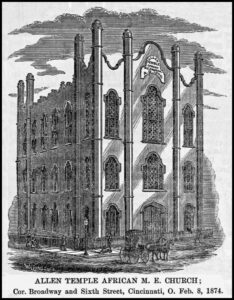 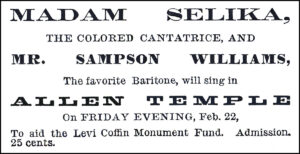 Cincinnati Commercial, p.8. 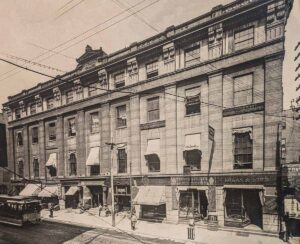 On March 20 and 22, 1878, College Hall (where the Mercantile Library is today) was filled by the “elite musical population” to hear “America’s Colored Patti,” according to The Cincinnati Daily Star. The proceeds from ticket sales would help Madame Selika further her vocal studies. The Columbus Dispatch, announcing her arrival there soon, mentioned George W. Williams introduced her to the select crowd at College Hall and her training in San Francisco and Chicago, “but believing in the excellent musical taste and culture of her home, Cincinnati, she preferred to be endorsed by the Queen City.” The program included Richard Mulder’s “Staccato Polka”; the cavatina “Com’è bello!” from Gaetano Donizetti’s Lucrezia Borgia; the “Eleazar Waltz from Fromental Halévy’s La Juive,” and the “Last Rose of Summer,” a popular encore for nineteenth-century concert divas. The Enquirer praised Selika’s “style that fairly surprised the audience with its excellence. Her voice compasses over three octaves, from lower E to high G, and is wonderfully powerful, liquid, and flexible.” 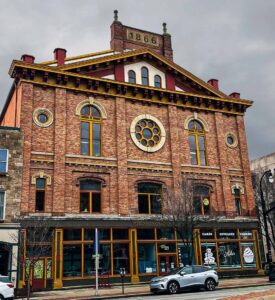 Hamilton, Ohio, 2026. On April 12, 1878, at Vine Street Congregational Church, the young ladies held a mission fundraising benefit and supper, during which Madame Selika sang several pieces. That same month, on April 19, 1878, at Opera Hall (Dixon Opera House) in Hamilton, Ohio, Madame Selika was greeted with a fine house, according to the Cincinnati Daily Star. |
SELIKA SINGS AT THE WHITE HOUSE FOR PRES. & MRS. HAYES & CITY’S BLACK ELITE
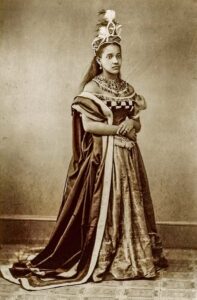
White House Historical Association.
On November 13, 1878, Wednesday, 8 p.m., in the Green Room, Madame Selika became the first African American to sing in the White House for President Rutherford B. Hayes and First Lady Lucy Hayes. She performed at the White House upon the invitation of Mrs. Hayes. Guests included D.C.'s prominent Black society members, Dr. A.T. (Alexander Thomas) Augusta, the first African American professor of medicine in the U.S at Howard University, C.A. (Christian Abraham) Fleetwood, honored Sergeant Major of a Civil War Union Army Black regiment, the Washington Cadet Corps, and choirmaster of several D.C. Black churches. The most notable guest was Hayes’s 1877 appointee to U.S. Marshal of D.C., Frederick Douglass, and his son and wife, Mr. and Mrs. Lewis H. (Helen Amelia Loguen) Douglass. Professor Richter accompanied on piano in “excellent style.” By this concert, Madame Selika had gained the moniker, “Queen of Staccato,” and showcased her signature piece, Mulder’s “Staccato Polka."
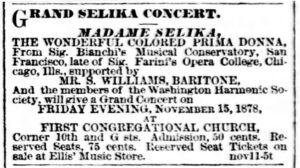
The program also included Thomas Moore’s “The Last Rose of Summer,” Verdi’s “Enani, involami,” and Harrison Millard’s “Ave Maria.” Her husband sang one selection, Bliss’s “Far Away.” “Every piece was heartily applauded. The singers were afterwards warmly congratulated by Mr. and Mrs. Hayes,” stated The Washington Post. The following Friday, Madame Selika and her husband performed at the Congregational Church with the Washington Harmonic Society, and The National Republican reviewer wrote:
BRIEFLY IN BOSTON WITH SUPPORT
In Maud Cuney Hare’s book, Negro Musicians and Their Music (1936), she recounts how Frances “Fannie” G. Bailey Gaskins invited Madame Selika to Boston after hearing her in San Francisco. Selika moved to Boston to study voice and languages and perform, while living with Fannie's parents, prominent Black Bostonians, Mr. and Mrs. John B. (Annie E.) Bailey, at 14 Rutland Street, from late 1878 to 1880. The Baileys were the maternal grandparents of Maud’s husband, and he and his parents also lived at 14 Rutland Street, most likely telling her of Selika’s stay.
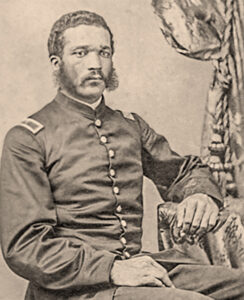
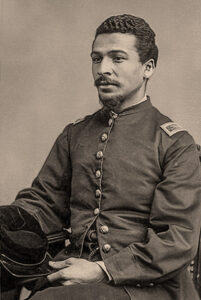
Support from Boston's Black community included impresarios Lieutenant William H. Dupree and his friend, James Monroe Trotter, since their time in Ohio. Trotter grew up in Cincinnati, studied music in the private African American Gilmore High School, and moved to Boston, authoring the landmark book, Music and Some Highly Musical People (1878).
BOSTON CONCERTS
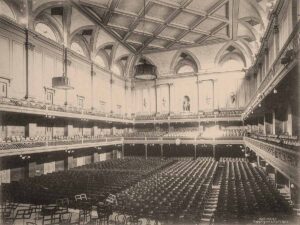
Courtesy of Historic New England.
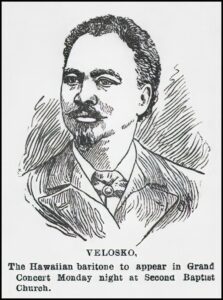
Sampson Williams, April 14, 1894.
Madame Selika performed at a private concert for Harvard’s Wendell Phillips Club at Parker Memorial Hall on October 27, 1879, followed by a public concert at Boston Music Hall with the Redpath Lyceum on November 11, 1879, receiving praise in the Boston Globe as "a phenomenal artiste.” Shortly thereafter, she and her husband, who adopted the stage name “Velasco,” sometimes “Velosko, The Hawaiian,” left for Europe. [Perhaps after Tomás de Torrejón y Velasco, 17th-century composer.]
EUROPEAN TOUR, 1882 to 1885
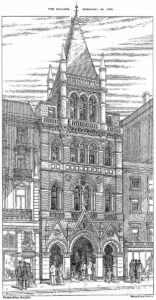
London, Feb. 24, 1883.
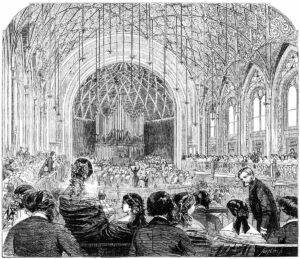
v.32, n.912, April 10, 1858, p.369.
From 1882 to 1885, Selika and Velasco traveled Europe, performing in major cities. A review in The Daily News of London noted that a benefit concert for the Enslaved Cuban Children Relief Fund on October 13, 1883, in St. James’ Hall, was well-received, featuring “Carlotta Patti (sister of the eminent prima donna) and Madame Selika (a Creole lady)." It is unknown if Queen Victoria attended, but the event was endorsed by James Russell Lowell, poet, abolitionist, and U.S. Minister to the U.K. (Court of St. James’s), and the Marquis de Casa Laiglesia, Ambassador of Spain to the U.K., and organized by Signor Vergara, tenor and manager. The Era of London, reviewer glowed about Madame Carlotta Patti, “the chief attraction” and the “fresh vocalist," Madame Selika's “Ave Maria" by H. Dana.
RESPECT & SUPPORT ABROAD
In a report from Europe on March 3, 1883, James M. Trotter wrote in the New York Globe that Madame Selika studied under Signor Mazzoni while touring with her husband, who was both baritone and manager. They performed concerts throughout England, Scotland, France, Germany, and Belgium. Trotter included a comment from Mr. Williams that, "never once have they been slighted on account of their color, and at the most elegantly appointed hotel in Brussels could not have received more polite attention had they been Madame (Adelina) Patti and husband.” Trotter emphasized their respectful treatment abroad, declaring, “What a lesson for our yet uncivilized America!” He also mentioned the successful Bohee Brothers, formerly of Chicago, who were supportive of Madame Selika and her husband, likely referring to James Douglass and George Bohee, who became established entertainers in London.
BACK HOME IN OHIO, TEACHING VOICE IN COLUMBUS
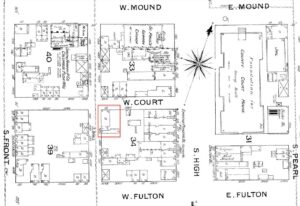
After three years touring Europe, Mr. and Mrs. Williams returned to live in downtown Columbus, Ohio, at 23 W. Court Street (razed) for six years. Perhaps planning to settle down, Mary S. Williams bought almost 10 acres of land, two lots in a subdivision four miles west of downtown Columbus, for $550 in 1886, but sold it in 1901, never appearing to have built a home or lived there.
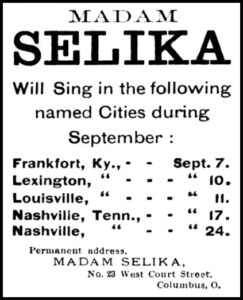
23 W. Court St., Columbus, O., Cleveland Gazette, Sept. 22, 1888, p.4.
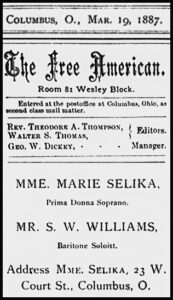
23 W. Court St., Columbus, O.,
The Free American,
Mar. 19, 1887, p.4.
While in Columbus, Madame Selika taught voice and kept traveling to perform across the region. She advertised in the Cleveland Gazette and in The Free American (Columbus’s Black press). From Columbus, she often travels to Cincinnati to perform.
1887 IN CINCINNATI
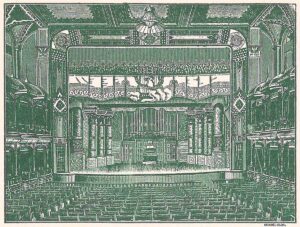
On September 23, 1887, Friday, at Cincinnati’s Odeon Theater (part of the campus of the College of Music of Cincinnati, next door to Music Hall), Union Baptist Church hosted Madame Selika, the main vocal attraction, to raise funds for their sinking fund. The Cincinnati Commercial Gazette on September 18, advertised that her vocal powers were widely known, even in England and Germany. Literary talent included elocutionist Hallie Q. Brown.
MADAME SELIKA’S CINCINNATI MUSIC HALL DEBUT IN 1887On September 24, 1887, Saturday, Madame Marie Selika and her husband performed on the stage of Music Hall “with its loftiness and chaste grandeur” … “a temple devoted to art, music, and patriotism,” for an overflowing audience of 15,000 Black and white citizens attending the Republican ratification meeting endorsing the Ohio Republican Gubernatorial ticket. Black men had gained the right to vote in 1870, and the Republican Party was the era’s progressive party, driving civil rights reform for African Americans. The Cincinnati Commercial Gazette continued to describe the event in Music Hall as "tastefully arranged" by the Young Men’s Blaine Club (Y.M.B.C.)* and “… the prospect of victorious labor massed against the tyranny of ignorance led on by demagogues simulating the interest of labor.” PARADE TO MUSIC HALLThe board of directors and officers of the Blaine Club led a parade at 8:00 am from their clubhouse (62 W. Eighth St.) to Music Hall. They marched in dress uniforms with club badges, stovepipe hats, and gloves, carrying light canes. Following in open barouches (four-wheeled carriages) were Ohio politicians General Edward F. Noyes, Major Benjamin Butterworth, William O. Bradley of Kentucky, and other speakers for the event. Louis M. Ballenberg’s full band came behind. Then the Young Men's Blaine Glee Clubs and Weber’s Military Band. The parade and attendees in Music Hall included hundreds of members of the Tenth Ward Republican Club with their band, the Sixteenth Ward Club with its drum corps, the Venetian Republican Club made up of “old soldiers” whose “service was so active its memory can never die,” the African American Douglass Club of the East End (McAllister Street) and the African American Ruffin Club*. PROCESSION MARCHES INTO SPRINGER AUDITORIUM WITH CHEERSAt Music Hall, the African American Robert Elliott Club (212 Elm Street), with their band under the command of Captain Ford Stith*, and the Sherman Club of the Twenty-fourth Ward and band prepared to march into Music Hall. Other attending clubs at Music Hall were the Union Veteran Club and the Sixteenth Ward Republican Club. Hundreds of Black and white Republican club members filled the main floor, while thousands cheered from the balconies. The African American clubs – Ruffin and Elliott – received the loudest cheers entering the hall. The Commercial Gazette expressed that all club members embodied the Elliott Club motto, “Vincit amor patriae,” meaning “love of country prevails, or patriotism conquers.” THE REPUBLICAN RATIFICATION MEETING BEGINSOn the Music Hall stage, adorned with U.S. flags, were the vice presidents of the ratification committee seated in front of the great organ, along with prominent citizens and their wives. Mr. Miller Outcalt, President of the Blaine Club, called the meeting to order at 9:00 am, leading the audience in singing “America” with the beginning lines “My country, ‘tis of thee, Sweet land of liberty.” He praised the state and local ticket and introduced Mayor Smith, who highlighted the party's Cincinnati successes. The Blaine Glee Club sang “No Section Lines” in call and response with the crowd. Next, Hon. W.O. Bradley, a former Republican candidate for Governor of Kentucky, urged Southerners and Ohioans to unite for Republicanism. “We over there are prepared to shake from our wrists the manacles that have bound us for so long. Kentucky is reaching across the beautiful Ohio and asking you to clasp hands at the next election (and) to overcome to victory to the music of the Union … a vote (should be) cast for the party of progress and reform … against oppression at the ballot-box in the South.” MADAME SELIKA & HUSBAND SING ON MUSIC HALL'S STAGE Then a very pleasant interlude now occurred. It was furnished by the distinguished colored soprano, Madame Marie Selika. She sang a grand aria from “Lucia,” and afterwards a duo from “Trovatore” with her husband, who has a good baritone voice. Madame Selika has a soprano voice of striking purity, asserting its power in trills and other embellishments as well as on sustained notes. After, she was made the recipient of a very handsome floral gift.
-The Commercial Gazette, Cincinnati, September 9, 1887, p.10. The Young Men’s Blaine Club presented Madame Selika a floral arrangement shaped like the letter “S” after her performance. Walter S. Thomas, publisher and editor of The Free American, Columbus's Black newspaper, delivered the final speech, praising Governor Foraker as a suitable presidential candidate. The meeting adjourned at 11:35 p.m. RECEPTION FOR SELIKA AT LLOYD JOHNSON’S DELMONICO RESTAURANT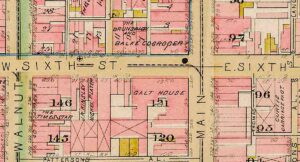 The Cleveland Gazette reviewer highlighted an unfortunate oversight during Selika’s performance at Music Hall, noting “Union Baptist Church neglected to present a single flower to the celebrated artist, who is the pride of every intellectual colored citizen. Madame Selika is a native of this city, where she spent her early school days. Before her marriage, her name was Miss Mary Price.” The Gazette also reported that the following Monday evening, on September 26, 1887, members of the old Eureka Club gathered for a reception in honor of Madame Selika and Mr. Williams at Cincinnati's Delmonico Restaurant, 13 W. Sixth Street (razed). This restaurant and boarding house were owned by Lloyd Johnson, one of Cincinnati's wealthiest African Americans. He was also the head chef and operated a successful catering business for both Black and white events throughout the city. Guests enjoyed a remarkable menu, the best seen among the city's Black community in the past fifteen years, said the reviewer. |
SELIKA CONTINUES TO TOUR AND FACE RACISM
In 1889, while Madame Jones was touring the West Indies, Madame Selika was performing in the Deep South. During this time, she crossed paths with her younger contemporary, African American concert singer Flora Baston Bergen, known as "The Queen of Song." A reviewer from the Indianapolis Freeman noted that the Selika combination—comprising Madame Selika, her husband Sampson W. Williams, and Miss Hallie Q. Brown—“took Savannah, GA, by storm” in March of 1889. The review in the Savannah Morning News, titled “Mme. Selika’s Concert: The Creole Songstress” acknowledged the audience gave “a storm of applause” for her Verdi “Ah farse e lui,” and continued, “her ‘Echo Song’ by Eckhart … (displayed) her voice has good timbre, extensive range, and if the singer were a white person her singing could not fail to create a furore in any circle.” Also, during the Southern tour, the April 1927 Indianapolis Freeman reported that Madame Selika canceled a performance at an opera house because they refused to sell first-class seats to Black patrons.
SPRING OF 1890, SELIKA TOURS KANSAS CITY TO NEW YORK CITY
In 1890, Madame Selika, internationally recognized, with her husband, toured from Kansas City to New York City. In Kansas City, Missouri, The Indianapolis Freeman announced that she was “undoubtedly the greatest living prima donna of her race.” Their tour ended in December in Brooklyn’s Association Hall, where Selika “carried the audience by storm and her selections of Il Trovatore were rendered with marvelous ease and grace.” The Freeman also reported from an interview on tour that
Mme. Selika has announced herself a woman with a mission. She is willing to make a sacrifice of her life that the colored race of America may learn of higher music than that which they have heretofore been acquainted with … her efforts to elevate her race, she says, will only end with her death.
1891-1893 TO EUROPE AGAIN ON TOUR WITH SPECIALTY COMPANY
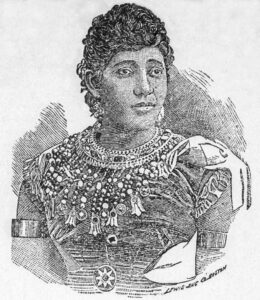
The Indianapolis Freeman, April 14, 1894, p.8.
In 1891, Selika and her husband signed a contract for a three-year tour of Europe with William Foote’s (white manager) Afro-American Specialty Company for $21,000, despite critics viewing it as a step down. As minstrelsy's popularity waned, Foote aimed to showcase 40 Black musicians and actors in a higher-class variety show across Europe. They opened in Hamburg, Germany, on May 18, 1891, with Selika as the star, earning multiple encores. The tour ended early, in December of 1891, with 12 of the company remaining in Europe, including Madame Selika and her husband, to continue touring under a new manager until 1895; however, the Williamses returned home by 1893.
CHICAGO WORLD’S FAIR 1893
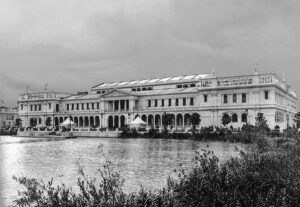
Many African Americans opposed their only open invitation for inclusion at the Chicago World’s Fair, to be on the designated “Colored Folks Day” on August 25, 1893. Instead, Madame Selika performed at more welcoming venues nearby. Madame Jones sang at the fair in the Woman’s Building on September 25, 1893. Walter B. Hayson, of the Cleveland Gazette, reviewed Jones’s concert, comparing her to Selika. He praised her full, deep tones, though declared Selika still “held first place among music connoisseurs.”
MADAME SELIKA, JONES, & BASTON IN CARNEGIE HALL CONCERT
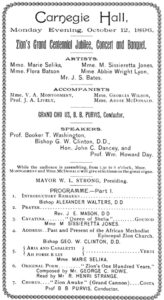
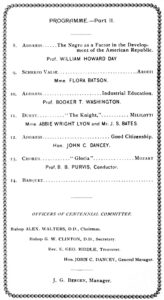
On October 12, 1896, Madame Selika performed at Carnegie Hall for the final event of the Zion Grand Centennial Jubilee, marking the 100th anniversary of the Zion African Methodist Episcopal Church (corner of W. Tenth and Bleecker Streets). The New York Times reported that the most fashionable of Black society were in attendance, and Mayor Strong introduced the famous soloists. Sissieretta Jones, the “Black Patti,” sang a cavatina from Gounod’s La Reine de Saba, Madame Selika sang an Aria from Verdi’s La Traviata, “Ah fors’ è lui,” and Flora Baston sang Arditi’s “Waltz Song,” with a chorus of 100 voices. Elocutionist R. Henri Stranger recited a poem, and Booker T. Washington delivered an address.
SELIKA MOVES TO TEACH IN HARLEM
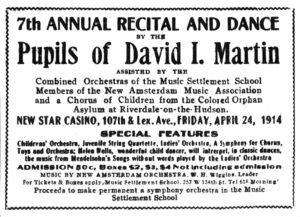
The New York Age, April 30, 1914, p.6.
After nearly 40 years of singing together, Selika became her husband’s caretaker, spending the last nine years of their lives together living in the Home for the Aged and Infirm Colored Persons in Philadelphia. After he passed away in 1911, she moved to New York City and taught vocal lessons to children and to artists who came to Harlem during the Renaissance at the Martin-Smith Music School (est. 1911). This school was established by David Irwin Martin, jazz pianist, composer, and violinist, and pianist Helen Elsie Smith (later Mrs. Robert Nathaniel Dett). It was the first private music school in the U.S., founded by African Americans for Black students and teachers. It followed the Washington Conservatory of Music (est. 1903), founded by Harriet Gibbs Marshall, an Oberlin College graduate (1889). In 1921, the Cosmopolitan School of Music was established in Cincinnati by Artie and Anna Howard Matthews at 823 W. Ninth Street.
LEADING THE FUTURE
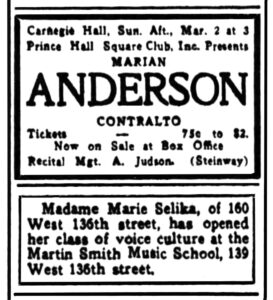
Madame Selika at Marin Smith Music School,
The New York Age, Feb. 15, 1930, p.7.
It would not be until the mid-20th century that Black operatic singers would begin to appear in leading roles in opera productions with major U.S. opera companies. The National Negro Opera Company (1941-1961) became the first enduring and successful African American opera company in the U.S. Marian Anderson, who performed in Cincinnati and at Music Hall in 1944, 1952, 1954, and 1959, made history as the first Black singer in an opera production with the Metropolitan Opera in 1955.
In the 19th century, Black operatic prodigies strived to overcome stereotypes created in degrading minstrelsy and chose to break from the confines of singing only spirituals or jubilee repertoire. Despite facing discrimination, segregated audiences, and reviews that unjustly compared their abilities to white opera prima donnas, these Black divas persevered.
Madame Selika rose from her modest roots, achieved classical training, experience, and fame, sharing her incredible voice across the country and in Europe from churches to prestigious concert halls for 50 years, and became one of the preeminent operatic and classical vocalists of the century.
“Time nor rivals can wrest her laurels so richly won … Madame Jones is a great singer ...
Madame Selika is the greatest.”
– John Edward Bruce “J.E. Bruce Grit”, Cleveland Gazette, Oct. 22, 1892.
Mary S. Price Holloway, Madame Selika, who was born in Natchez, Mississippi, and raised in Cincinnati, was a devout Catholic; her funeral and requiem high mass was held at St. Mark’s Roman Catholic Church on the morning of May 24, 1937. Her body was sent from New York City to be laid to rest in the family plot at Holy Cross Cemetery, Philadelphia, Pennsylvania. Her obituary in the New York Age, May 29, 1937, continued that she had three surviving half-sisters in London, Ohio, and a brother whose whereabouts she had not known for some time, as well as a nephew and niece in New York, and many distant relatives in Ohio.